Chemical distribution area of a semiconductor fab with fluoropolymer tubing and stainless chemical supply cabinets

Semiconductor

PFA-Lined Valves for Semiconductor Wet Processing

Ultra-High Purity Flow Control for Wet Etching, Wafer Cleaning, and Chemical Delivery Systems

Semiconductor manufacturing demands the highest levels of chemical purity and contamination control. Wet processing—including etching, cleaning, and surface preparation—uses aggressive chemicals such as hydrofluoric acid (HF), sulfuric acid, and ammonium hydroxide at concentrations and temperatures that rapidly degrade conventional materials.

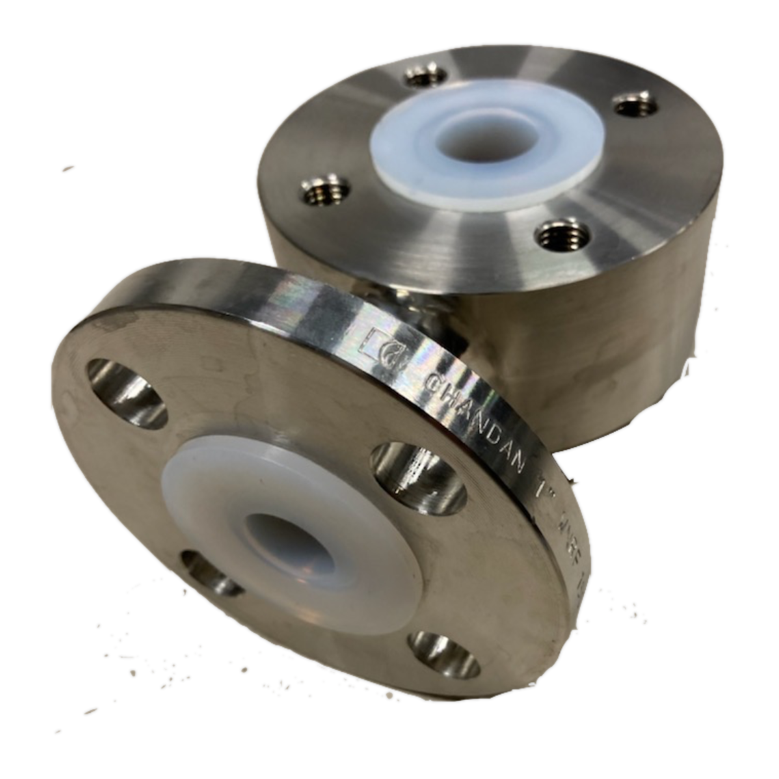
GFT9 manufactures PFA-lined valves and sight glasses from our Clean Room Series, featuring electropolished stainless steel bodies with virgin PFA linings. These components provide the chemical resistance and low extractables required for semiconductor wet bench applications and chemical delivery systems.

Our valves serve the chemical supply side of wet processing: bulk acid and caustic, utilities, scrubbers and waste-acid lines.

View Clean Room Product Range

Why PFA

Why Semiconductor Manufacturing Requires PFA-Lined Components

Semiconductor wet processing presents extreme material compatibility challenges. Process chemicals include some of the most aggressive substances in industrial use, while purity requirements exceed those of virtually any other industry.

The Contamination Challenge:

Modern semiconductor devices feature structures measured in nanometers. At these scales, even trace contamination—metal ions, particles, or organic compounds—can cause device failures. Wet processing chemicals must be delivered to the wafer surface without picking up contamination from piping, valves, or other fluid handling components.

Conventional metallic components are unsuitable for most semiconductor wet process chemicals. Stainless steel dissolves rapidly in hydrofluoric acid. Even specialized alloys like Hastelloy have limited resistance to the chemical combinations used in semiconductor processing. Plastic materials offer better chemical resistance but may release particles or organic extractables that contaminate process streams.

Why PFA is the Solution:

PFA (Perfluoroalkoxy Alkane) has become the standard material for semiconductor wet process fluid handling because it offers:

• Resistance to hydrofluoric acid (HF); limits in the table below
• Resistance to sulfuric acid, phosphoric acid, nitric acid, and their mixtures
• Compatibility with RCA clean chemistries (SC1, SC2) including hydrogen peroxide and ammonium hydroxide
• Smooth, non-particle-shedding surface that maintains fluid purity
• Up to +200 °C (Spheron9) or +150 °C (Videron9, Provaron9); see each valve's P-T rating

GFT9 Clean Room Series products combine PFA's chemical purity with the mechanical strength of stainless steel housings, providing reliable performance in demanding semiconductor manufacturing environments.

Applications

Applications Across Semiconductor Wet Processing

Semiconductor fabs require ultra-high purity components throughout their wet processing operations. GFT9 products serve critical functions in chemical delivery, wet bench processing, and facility systems.

Wet Etching Systems

Wet etching uses aggressive chemicals to selectively remove material from wafer surfaces. Hydrofluoric acid (HF) etches silicon dioxide. Phosphoric acid etches silicon nitride at elevated temperatures. Piranha etch (sulfuric acid + hydrogen peroxide) removes organic contamination. PFA-lined valves control chemical flow to wet benches while maintaining the purity required for defect-free processing.

Wafer Cleaning (RCA Clean)

The RCA cleaning process—developed at RCA Laboratories and still widely used—employs SC1 (ammonium hydroxide + hydrogen peroxide) and SC2 (hydrochloric acid + hydrogen peroxide) solutions to remove organic and metallic contamination from wafer surfaces. PFA-lined components handle these oxidizing mixtures without degradation or contamination.

Chemical Delivery Systems

Bulk chemicals must be delivered from storage to point-of-use without contamination. Chemical delivery systems use PFA-lined valves to control flow from drums or bulk tanks through distribution manifolds to individual process tools. Sight glasses enable visual verification of chemical flow and level.

→ Spheron9 ball valve, DN 15 – 200 · up to 16 bar · up to +200 °C · Videron9 sight glass, DN 15 – 250 · 16 bar · up to +150 °C · Provaron9 sample valve, DN 25 – 80 · up to 16 bar · up to +150 °C · Imperium9 control valve, DN 15 – 100 · up to 16 bar · up to +180 °C — dosing, pH control · Membron9 diaphragm valve, DN 15 – 150 · pressure per size, see P-T — acid and caustic dosing · Prohibron9 ball check valve, DN 15 – 200 · up to 10 bar · up to +200 °C — dosing-pump discharges

Ultra-Pure Water (UPW) Systems

Ultrapure water distribution and point of use are normally built from solid all-PFA components. PFA-lined valves serve the utility lines around it; tell us the duty and we will say which fits.

Chemical Recirculation and Temperature Control

Many wet processes require precise temperature control of chemical baths. Recirculation systems move chemicals through heaters or chillers and back to process tanks. PFA-lined valves and sight glasses in these loops must withstand continuous chemical exposure at elevated or reduced temperatures.

→ Videron9 sight glass, DN 15 – 250 · 16 bar · up to +150 °C · Purion9 T-strainer, DN 25 – 150 · PN 16 · −10 °C up to +150 °C — ahead of pumps · Vibron9 swing check valve, DN 40 – 400 · up to 16 bar · up to +150 °C — pump discharges

Scrubbers and Waste-Acid Lines

Exhaust scrubbers and waste-acid lines carry spent acid and caustic. A metal body with a full PFA lining gives pressure rating and chemical resistance there.

→ Spheron9 ball valve, DN 15 – 200 · up to 16 bar · up to +200 °C · Imperium9 control valve, DN 15 – 100 · up to 16 bar · up to +180 °C — dosing, pH control · Papilon9 butterfly valve, DN 40 – 600 · 10 bar to DN 450, 6 bar DN 500 – 600 · up to +200 °C — scrubber circuits · Vibron9 swing check valve, DN 40 – 400 · up to 16 bar · up to +150 °C — pump discharges

Chemical resistance

Typical media and PFA resistance

MediumFormulaConcentrationMax. temp.Rating
Hydrofluoric AcidHFPer medium, see resistance guide150 °C Excellent
Sulfuric AcidH₂SO₄Per medium, see resistance guide200 °C Excellent
Phosphoric AcidH₃PO₄Per medium, see resistance guide150 °C Excellent
Nitric AcidHNO₃Per medium, see resistance guide120 °C Excellent
Hydrogen PeroxideH₂O₂Per medium, see resistance guide80 °C Excellent
Ammonium HydroxideNH₄OHPer medium, see resistance guide100 °C Excellent

PFA lining resists the media listed above; more media are in the PFA chemical resistance guide. Temperature limits shown are conservative for continuous service; the valve's own limit is its P-T rating. Contact us for your media and conditions.

Excellent full resistance, continuous service · Good suitable for most applications · Limited check the conditions with us. Ratings refer to the PFA lining; the valve's own pressure–temperature rating also applies.

Products
Clean Room Series for Semiconductor Applications

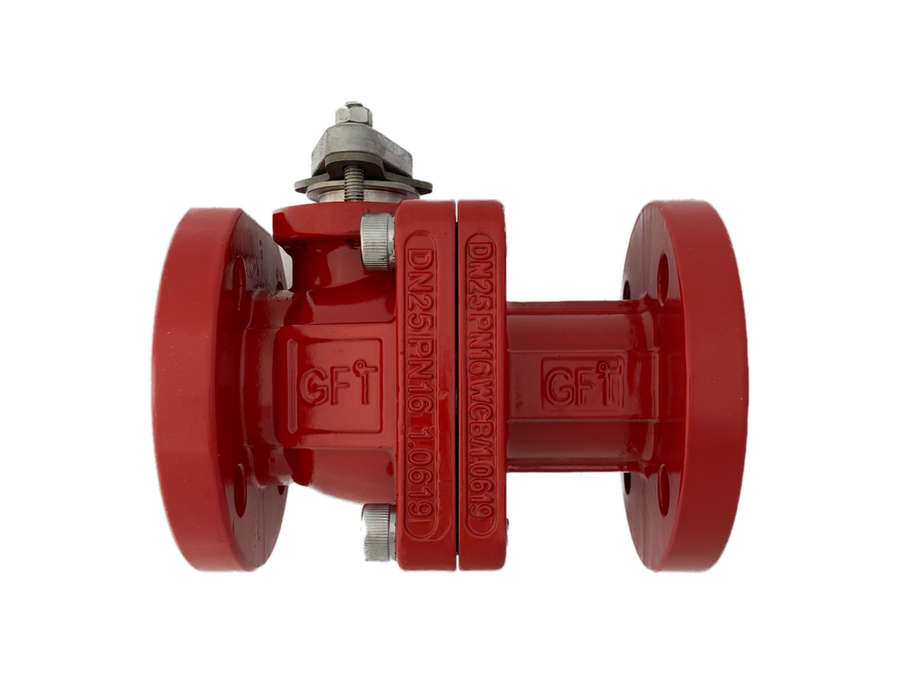
PFA-Lined Ball Valves — Spheron9

PFA-Lined Ball Valves — Spheron9

Full-bore isolation with a one-piece PFA-lined ball-stem and two-stage blow-out protection; manual or actuated.

DN 15 – DN 200 / NPS ½" – 8" · up to 16 bar · −10 °C (1.0619) or −60 °C (1.4408 / 1.4409) up to +200 °C, see P-T diagram · TA-Luft leakage class BH (DN 10 – DN 150, certified −20 °C to +180 °C) · actuator mounting to EN ISO 5211 · clean room version (DIN, ANSI) with electropolished 1.4408 (CF8M) body.

View Ball Valve Range →
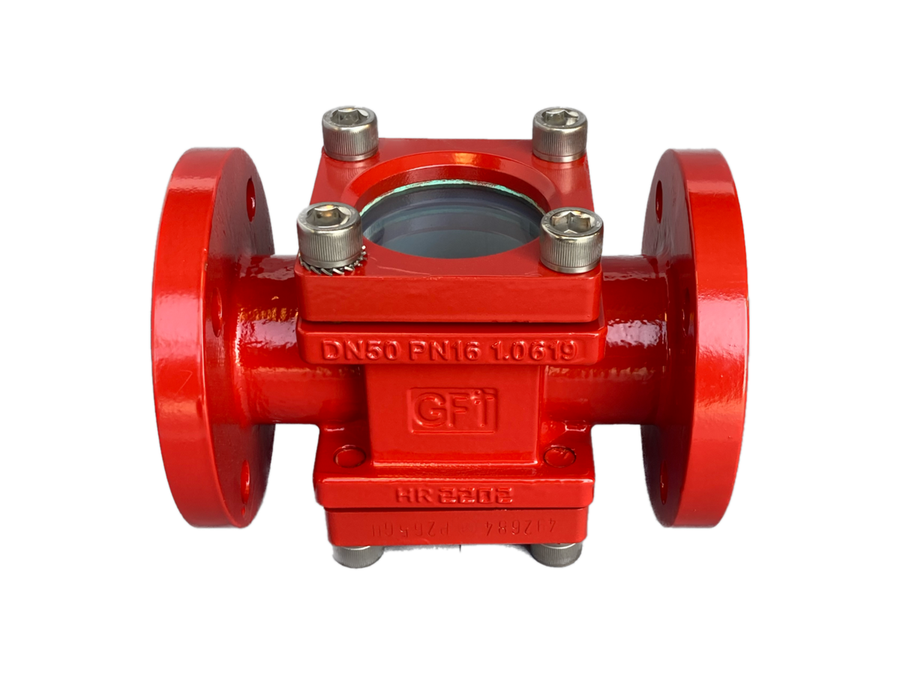
PFA-Lined Sight Glasses — Videron9

PFA-Lined Sight Glasses — Videron9

Visual control of flow, colour and level in lined lines. For HF and other media that attack glass, specify the FEP foil liner between glass and medium (on request).

DN 15 – DN 250 / NPS ½" – 10" · 16 bar · −10 °C up to +150 °C · clean room version with electropolished 1.4408 (CF8M) body.

View Sight Glass Range →
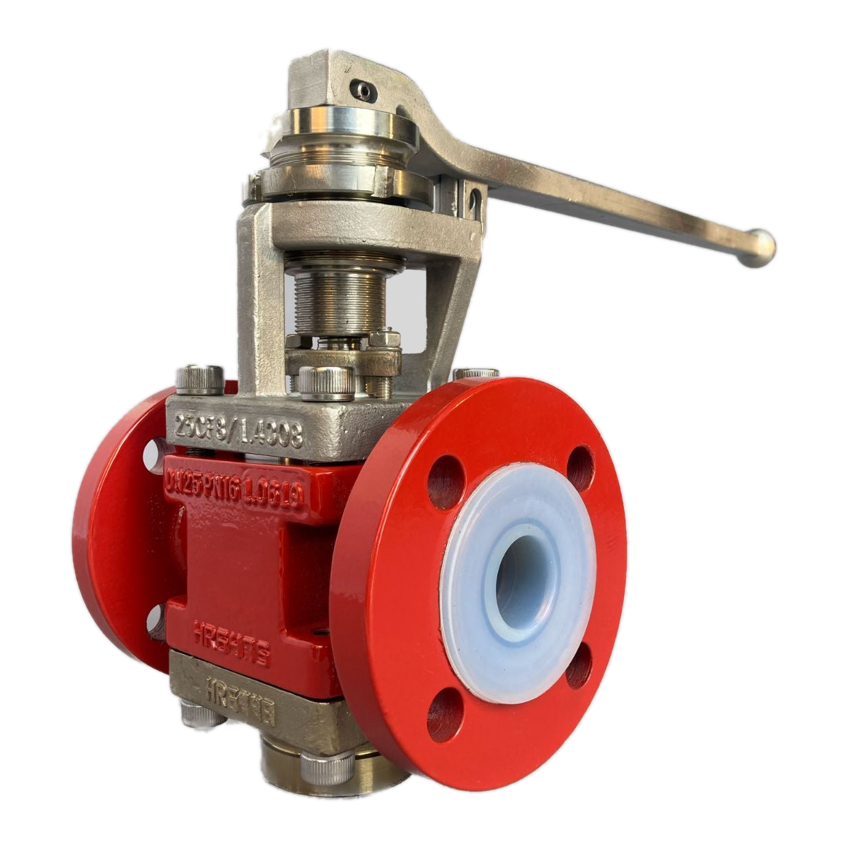
PFA-Lined Sample Valves — Provaron9

PFA-Lined Sample Valves — Provaron9

Sampling from lined lines without opening the system.

DN 25 – DN 80 / NPS 1" – 4" · up to 16 bar · −10 °C up to +150 °C · clean room version with electropolished 1.4408 (CF8M) body.

View Sample Valve Range →
Custom PFA Solutions & Development Partnerships

Custom PFA Solutions & Development Partnerships

Semiconductor equipment manufacturers and fab operators often require specialized components for specific applications. GFT9 offers custom PFA lining solutions and welcomes development partnerships for semiconductor fluid handling challenges.

Our engineering team can support:
• Custom configurations for integration with OEM equipment
• Specialized port arrangements and connection types
• Prototype development for new process applications
• Application engineering for challenging chemical services

Whether you're designing new semiconductor equipment or upgrading existing wet process systems, contact our engineering team to discuss your requirements.

Custom Made Solutions →

Quality

Quality and Documentation for Semiconductor Applications

  • Every valve is tested before delivery to DIN EN 12266-1.
  • EN 10204 3.1 material certificates with heat numbers.
  • Pressure-bearing products designed and manufactured to PED 2014/68/EU; the Spheron9 ball valve additionally certified under Module A2 with notified body 0035 and type-tested to TA-Luft (leakage class BH, DN 10 – DN 150, certified −20 °C to +180 °C).
  • Made in Germany · country of origin Germany.

FAQ

Questions we are often asked

Are PFA-lined valves used in semiconductor fabs?

Yes — on bulk acid and caustic supply, utilities, scrubbers and waste-acid lines, where a metal body with a full PFA lining gives pressure rating and chemical resistance. For ultrapure point-of-use distribution, solid all-PFA components are the usual choice; tell us the duty and we will say which fits.

PFA or PTFE lining — what is the difference?

Both are fully fluorinated plastics with almost universal chemical resistance. PTFE cannot be melted, so PTFE liners are pressed and sintered. PFA can be melted, so we transfer-mould it into the valve body: the lining is dense, anchored in the body and follows complex shapes. If your specification says "PTFE-lined", a PFA-lined valve meets the same chemical duty — ask us for a comparison for your medium.

Which documents come with the valves?

Every valve is tested to DIN EN 12266-1 and ships with EN 10204 3.1 material certificates. Pressure-bearing products are designed and manufactured to PED 2014/68/EU; the Spheron9 ball valve is additionally certified under Module A2 and type-tested to TA-Luft.

Which GFT9 valve for which duty in a fab?

Acid and caustic supply: Spheron9 ball valve DN 15 – 200, Videron9 sight glass DN 15 – 250, Provaron9 sample valve DN 25 – 80. Dosing and pH control: Imperium9 control valve DN 15 – 100. Scrubber circuits and large lines: Papilon9 butterfly valve DN 40 – 600.

Discuss Your Semiconductor Project Requirements

Whether you're specifying components for new fab construction, upgrading existing wet process equipment, or developing specialized semiconductor manufacturing systems, our technical team is ready to support your project.

Contact Options:

Email: sales@gft9.shop
Phone:+49 2152 9148591

We support projects from initial specification through delivery, with technical consultation available for material selection, chemical compatibility verification, and application engineering.

Related: Clean rooms and high-purity chemical supply · Chemical storage and tank farms · Pharmaceutical and biopharma

Contact form