PFA-Lined Valves for Cosmetics & Personal Care Manufacturing
Contamination-Free Flow Control for Emulsion Processing, Ingredient Handling, and GMP-Regulated Production
Cosmetics and personal care manufacturing requires precise control over product purity and consistency. From emulsion processing for creams and lotions to ingredient handling for fragrances and active compounds, process equipment must maintain product integrity while withstanding cleaning chemicals used between batches.
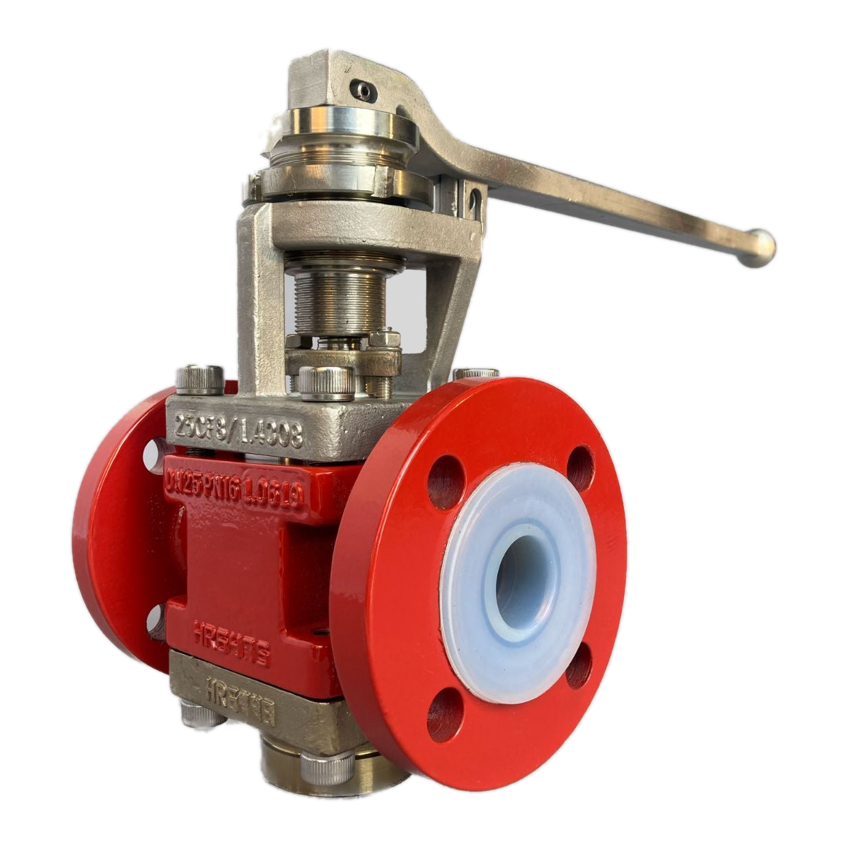
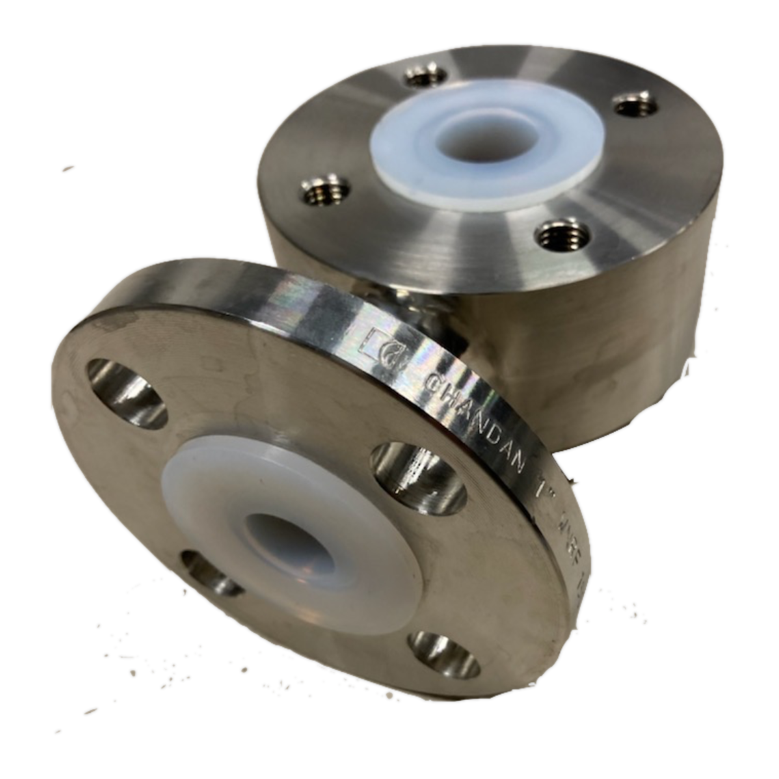
GFT9 manufactures PFA-lined valves and sight glasses from our Clean Room Series, featuring electropolished stainless steel bodies with virgin PFA linings. The PFA wetted path resists the ingredients and cleaning chemicals listed in the table below and supports cleaning between batches.
Our products serve cosmetics manufacturers, personal care product formulators, and contract manufacturers where hygiene, chemical resistance, and batch-to-batch consistency are essential requirements.
Cosmetics and personal care manufacturing presents unique challenges: equipment must handle diverse formulations—from water-based emulsions to oil-based products, from acidic formulations to alkaline solutions—while maintaining absolute cleanliness between batches to prevent cross-contamination.
The Formulation Challenge:
Cosmetic formulations contain a wide range of chemical compounds:
• Acids (citric acid, salicylic acid, glycolic acid) for pH adjustment and active ingredients
• Alkaline compounds (sodium hydroxide, triethanolamine) for emulsification and pH control
• Organic solvents (alcohols, propylene glycol) as carriers and preservatives
• Surfactants and emulsifiers that can attack conventional materials
• Fragrances and essential oils that may interact with plastics
Equipment must resist all these substances without leaching contaminants into products or degrading over time.
The Cleaning Challenge:
Between batches—especially when switching colors, fragrances, or formulation types—equipment requires thorough cleaning with caustic solutions, solvents, or sanitizers. Conventional valve materials may survive either the product or the cleaning chemicals, but rarely both.
Why PFA is the Solution:
PFA (Perfluoroalkoxy Alkane) resists the cosmetic ingredients and cleaning chemicals listed in the table:
• Resistant to the organic acids in the table
• Resistant to the alcohols and glycols in the table
• Resistant to the caustic cleaning solutions in the table
• Smooth surface supports cleaning and batch changeover
• EN 10204 3.1 certificates; FDA declaration for the PFA wetted parts on request
GFT9 Clean Room Series products combine electropolished stainless steel bodies with virgin PFA linings.
Applications
Applications Across Cosmetics Manufacturing
Cosmetics and personal care manufacturing facilities require chemically resistant, hygienic components throughout their production processes. GFT9 products serve critical functions across multiple applications.
Emulsion Processing
Creams, lotions, and other emulsion-based products are created by combining oil and water phases at controlled temperatures. PFA-lined valves control the transfer of heated oils, aqueous solutions, and the final emulsified product. The chemical inertness of PFA ensures no interaction with active ingredients or fragrances.
Raw materials for cosmetics include acids (for pH adjustment), preservatives, surfactants, and specialty chemicals. PFA-lined components safely handle these diverse ingredients during storage, transfer, and batching operations.
Colorants and fragrances require special handling to prevent cross-contamination between batches. The smooth PFA surface supports cleaning and changeover between colours and fragrances.
Transfer lines feeding filling equipment must maintain product purity through the final packaging step. PFA-lined ball valves provide reliable shut-off and flow control with a PFA-lined wetted path.
Manufacturing equipment requires regular cleaning with caustic solutions and solvents. PFA-lined components resist the cleaning chemicals listed in the table.
Chemical resistance
Typical media and PFA resistance
Medium
Formula
Concentration
Max. temp.
Rating
Sodium Hydroxide
NaOH
Cosmetic-use concentrations
100 °C
Excellent
Citric Acid
C₆H₈O₇
Cosmetic-use concentrations
100 °C
Excellent
Glycolic Acid
C₂H₄O₃
Cosmetic-use concentrations
80 °C
Excellent
Ethanol
C₂H₅OH
Cosmetic-use concentrations
60 °C
Excellent
Propylene Glycol
C₃H₈O₂
Cosmetic-use concentrations
100 °C
Excellent
Hydrogen Peroxide
H₂O₂
Up to 35%
60 °C
Excellent
PFA lining resists the acids, alkalis, alcohols, glycols and cleaning chemicals listed above. For other media, see the PFA chemical resistance guide. Temperature limits shown are conservative for continuous service; the valve's own limit is its P-T rating. Contact us for your media and conditions.
Excellent full resistance, continuous service · Good suitable for most applications · Limited check the conditions with us. Ratings refer to the PFA lining; the valve's own pressure–temperature rating also applies.
Products
Clean Room Series for Cosmetics Applications
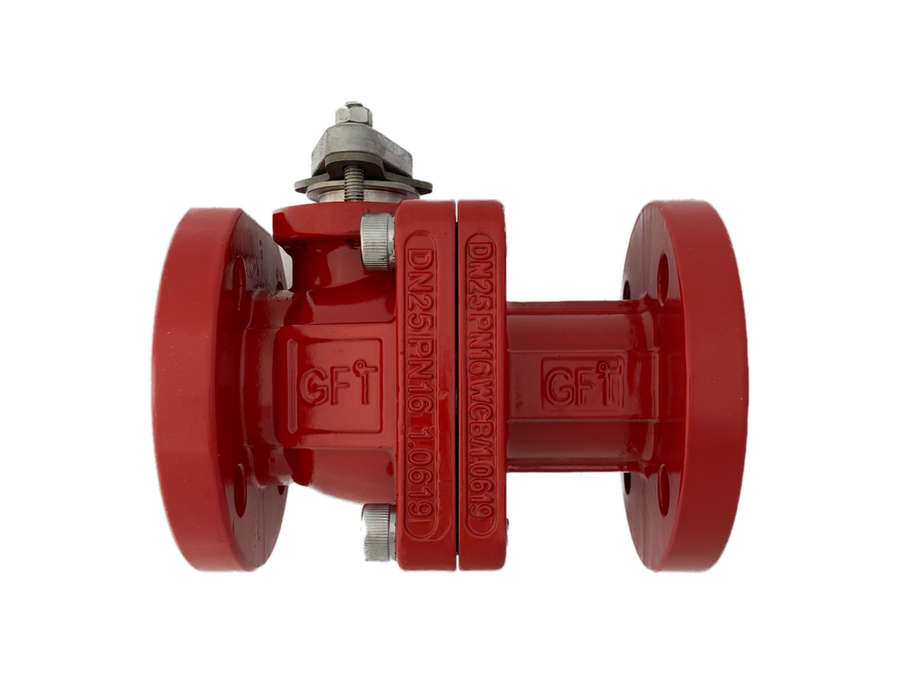
PFA-Lined Ball Valves — Spheron9
Full-bore isolation with a one-piece PFA-lined ball-stem and two-stage blow-out protection; manual or actuated.
DN 15 – DN 200 / NPS ½" – 8" · up to 16 bar · −10 °C (1.0619) or −60 °C (1.4408 / 1.4409) up to +200 °C, see P-T diagram · TA-Luft leakage class BH (DN 10 – DN 150, certified −20 °C to +180 °C) · actuator mounting to EN ISO 5211 · clean room version with electropolished 1.4408 (CF8M) body.
Cosmetics manufacturers often have specific requirements based on their formulations, processes, and quality standards. GFT9 offers custom PFA solutions and works with equipment manufacturers to develop application-specific components.
Our engineering team can support:
• Custom configurations for integration with mixing and filling equipment
• EN 10204 3.1 certificates; FDA declaration for the PFA wetted parts on request
• Development partnerships for contract manufacturers
• Prototype development for new applications
Contact our engineering team to discuss your specific requirements.
Quality
Quality and Documentation for GMP-Regulated Production
Every valve is tested before delivery to DIN EN 12266-1.
EN 10204 3.1 material certificates with heat numbers.
On request: FDA declaration for the PFA wetted parts.
Pressure-bearing products designed and manufactured to PED 2014/68/EU; the Spheron9 ball valve additionally certified under Module A2 with notified body 0035 and type-tested to TA-Luft (leakage class BH, DN 10 – DN 150, certified −20 °C to +180 °C).
Made in Germany · country of origin Germany.
FAQ
Questions we are often asked
When does cosmetics production need lined valves?
Where corrosive raw materials or aggressive cleaning agents would attack stainless steel, or where metal ions must not reach the product. The fluoropolymer wetted path resists both; check your formulation and temperature with us.
PFA or PTFE lining — what is the difference?
Both are fully fluorinated plastics with almost universal chemical resistance. PTFE cannot be melted, so PTFE liners are pressed and sintered. PFA can be melted, so we transfer-mould it into the valve body: the lining is dense, anchored in the body and follows complex shapes. If your specification says "PTFE-lined", a PFA-lined valve meets the same chemical duty — ask us for a comparison for your medium.
Which documents come with the valves?
Every valve is tested to DIN EN 12266-1 and ships with EN 10204 3.1 material certificates. Pressure-bearing products are designed and manufactured to PED 2014/68/EU; the Spheron9 ball valve is additionally certified under Module A2 and type-tested to TA-Luft. On request we add an FDA declaration for the PFA wetted parts.
What FDA documentation is available for PFA-lined valves in cosmetics?
We do not claim FDA approval for valves. On request we supply an FDA declaration for the PFA wetted parts of the Clean Room Series. GMP is the operator's practice; we provide EN 10204 3.1 material certificates for your file.
Which PFA-lined valve goes where?
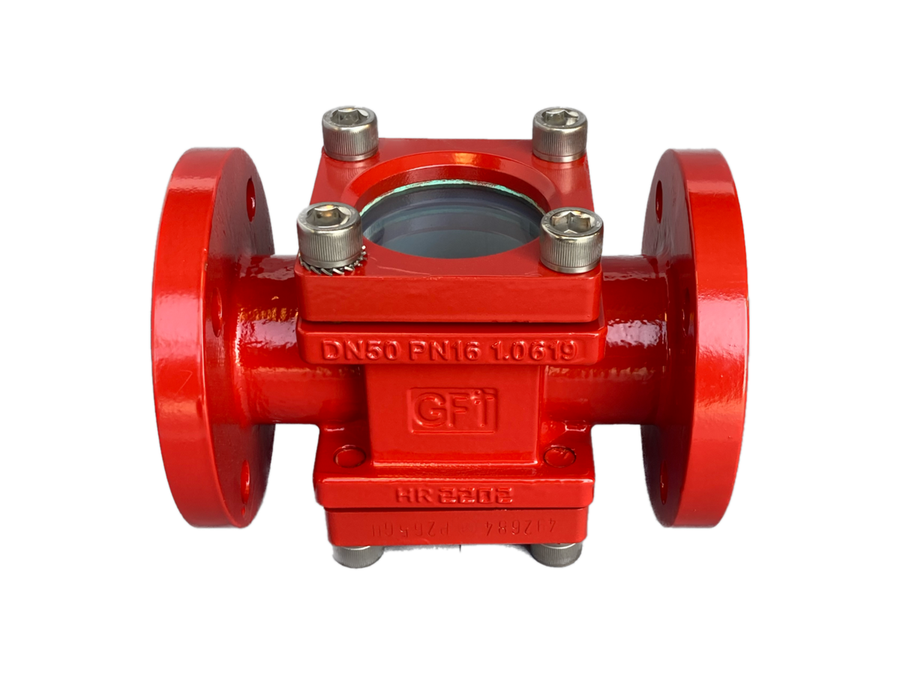
Spheron9 ball valves (DN 15 – 200) isolate transfer and filling lines. Imperium9 control valves (DN 15 – 100) dose and control pH. Videron9 sight glasses (DN 15 – 250) check flow and colour. Provaron9 sample valves (DN 25 – 80) take samples. Purion9 T-strainers (DN 25 – 150) protect filling equipment.
Discuss Your Cosmetics Manufacturing Requirements
Whether you're specifying components for a new manufacturing facility, upgrading existing equipment, or developing custom solutions for specialized formulations, our technical team is ready to support your project.
Contact Options:
Email: sales@gft9.shop Phone: +49 2152 9148591
We support projects from initial specification through delivery, with technical consultation available for material selection, sizing, and application engineering.