Corrosion-Resistant Flow Control for Bleaching Chemicals, Chlorine Dioxide, and Fiberline Operations
Modern kraft pulp mills rely on chlorine dioxide (ClO₂) bleaching to produce bright, strong pulp while meeting environmental standards. The Elemental Chlorine Free (ECF) process—now used in over 90% of bleached kraft production—requires equipment that withstands highly oxidizing chlorine compounds, strong acids, and caustic extraction stages.
GFT9 fluoropolymer-lined valves provide the chemical resistance essential for reliable operation in pulp bleaching. The PFA wetted path resists chlorine dioxide, hypochlorite and the acid and caustic stages around the bleach plant.
Manufactured in Germany, GFT9 products serve kraft mills, paper manufacturers and chemical preparation facilities.
Pulp bleaching subjects equipment to some of the most aggressive chemical conditions in industrial manufacturing. The combination of oxidizers, acids, and bases creates unique challenges.
The Bleaching Environment:
Chlorine dioxide (ClO₂) is a powerful oxidizing agent used at 8-12 g/L concentrations. It aggressively attacks stainless steel and most polymers, causing rapid corrosion and material failure.
Modern bleach sequences (typically DEOPDED or similar) alternate between:
• D Stages: Acidic ClO₂ at pH 2-4, temperatures to 70°C
• E Stages: Hot caustic (NaOH) extraction at pH 10-12, temperatures to 80°C
• P Stages: Alkaline hydrogen peroxide
No single conventional material handles this full chemical cycle.
Why PFA:
PFA resists the media listed in the table below:
• Resistant to chlorine dioxide solution at bleach-plant concentrations
• Resistant to the caustic solutions of the extraction stages
• Handles hydrogen peroxide and other oxidizers
• Resistant to sulfuric acid used in ClO₂ generation
• Valve temperature limits: +200 °C Spheron9, Papilon9, Prohibron9 · +180 °C Imperium9 · +150 °C Vibron9, Purion9, Videron9, Provaron9 — see each product's P-T rating
D-Stage Service:
In D-stage ClO₂ service, fluoropolymer-lined equipment avoids the chloride and oxidiser attack that limits stainless steel.
Applications
Applications in Pulp and Paper Manufacturing
Kraft pulp mills operate complex chemical processes from wood chip digestion through finished pulp. GFT9 products serve corrosion-critical functions throughout these operations.
Chlorine Dioxide Systems
ClO₂ generation, storage, and distribution represent the most demanding valve application in pulp mills. PFA-lined valves provide reliable service in:
• Generator feed systems (sodium chlorate, sulfuric acid)
• ClO₂ solution storage and transfer
• Distribution headers to bleach towers
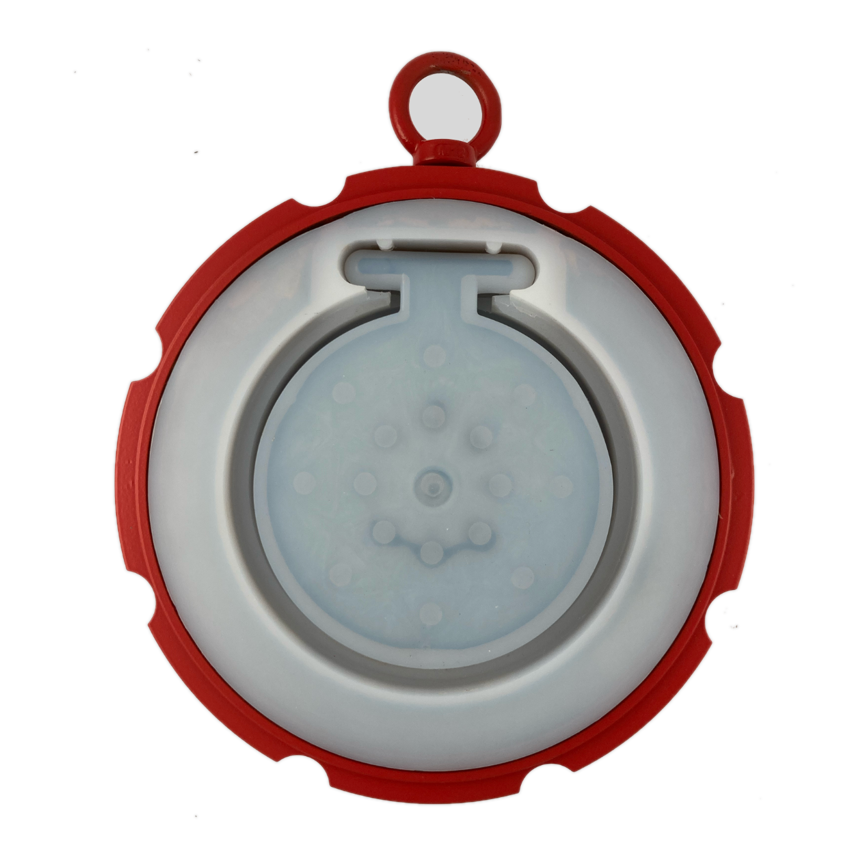
• Isolation and backflow protection on transfer lines
Each bleaching stage presents different chemical challenges. PFA-lined valves handle the full range:
• D Stages: Acidic ClO₂ dosing and tower isolation
• E Stages: Caustic feed and extraction filtrate
• P Stages: Peroxide injection systems
• Stage-to-stage transfer lines
Pulp mills typically operate internal chemical plants producing bleaching reagents. PFA-lined components serve:
• ClO₂ generators (acid feed, product handling)
• Sulfuric acid dilution systems
• Caustic preparation and distribution
• Chemical storage tank isolation
The fiberline conveys pulp stock through washing, screening, and bleaching. Valves in filtrate systems handle weak black liquor, bleach plant filtrates, and various process streams containing dissolved organics and process chemicals.
Tall Oil Recovery
Kraft pulping produces crude tall oil as a valuable byproduct. PFA-lined valves serve separation systems where contact with acidic, organic-rich streams occurs.
Chemical resistance
Typical media and PFA resistance
Medium
Formula
Concentration
Max. temp.
Rating
Chlorine Dioxide
ClO₂
Process concentrations to 12 g/L
80 °C
Excellent
Sodium Hypochlorite
NaOCl
Up to 15 %
60 °C
Excellent
Sulfuric Acid
H₂SO₄
Up to 98 %
120 °C
Excellent
Sodium Hydroxide
NaOH
Up to 50 %
120 °C
Excellent
Hydrogen Peroxide
H₂O₂
Up to 50 %
60 °C
Excellent
Chlorine (wet)
Cl₂
Saturated
80 °C
Excellent
PFA resists the chlorine dioxide and chloride attack that limits stainless steel in D-stage bleaching. See the PFA chemical resistance guide. Temperature limits shown are conservative for continuous service; the valve's own limit is its P-T rating. Contact us for your media and conditions.
Excellent full resistance, continuous service · Good suitable for most applications · Limited check the conditions with us. Ratings refer to the PFA lining; the valve's own pressure–temperature rating also applies.
Products
PFA-Lined Products for Pulp and Paper Applications
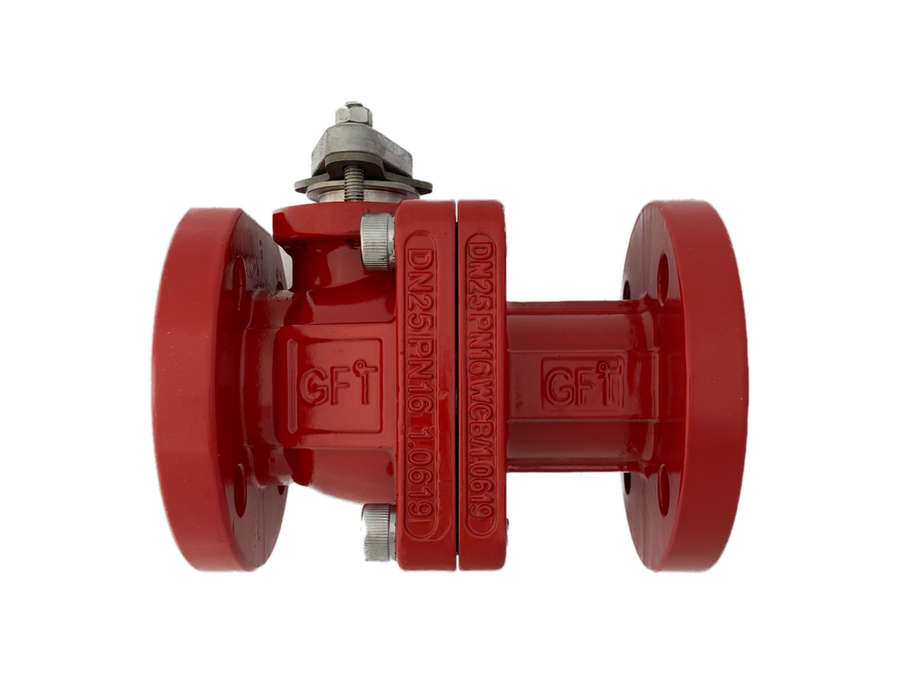
PFA-Lined Ball Valves — Spheron9
Full-bore isolation with a one-piece PFA-lined ball-stem and two-stage blow-out protection; manual or actuated.
DN 15 – DN 200 / NPS ½" – 8" · up to 16 bar · −10 °C (1.0619) or −60 °C (1.4408 / 1.4409) up to +200 °C, see P-T diagram · TA-Luft leakage class BH (DN 10 – DN 150, certified −20 °C to +180 °C) · actuator mounting to EN ISO 5211 · clean room version with electropolished 1.4408 body.
Every valve is tested before delivery to DIN EN 12266-1.
EN 10204 3.1 material certificates with heat numbers.
Pressure-bearing products designed and manufactured to PED 2014/68/EU; the Spheron9 ball valve additionally certified under Module A2 with notified body 0035 and type-tested to TA-Luft (leakage class BH, DN 10 – DN 150, certified −20 °C to +180 °C).
Made in Germany · country of origin Germany.
FAQ
Questions we are often asked
Which bleaching chemicals do PFA-lined valves handle?
Chlorine dioxide solution, sodium hypochlorite, hydrogen peroxide and the acids and caustics around the bleach plant — PFA resists each of them; check your concentration and temperature with us.
PFA or PTFE lining — what is the difference?
Both are fully fluorinated plastics with almost universal chemical resistance. PTFE cannot be melted, so PTFE liners are pressed and sintered. PFA can be melted, so we transfer-mould it into the valve body: the lining is dense, anchored in the body and follows complex shapes. If your specification says "PTFE-lined", a PFA-lined valve meets the same chemical duty — ask us for a comparison for your medium.
Which documents come with the valves?
Every valve is tested to DIN EN 12266-1 and ships with EN 10204 3.1 material certificates. Pressure-bearing products are designed and manufactured to PED 2014/68/EU; the Spheron9 ball valve is additionally certified under Module A2 and type-tested to TA-Luft.
Which PFA-lined valve goes where in a bleach plant?
Whether you're upgrading bleach plant equipment, specifying valves for a new ClO₂ generator, or sourcing maintenance spares, our technical team supports your project.
We work with:
• Pulp and paper mills
• EPC contractors and engineering firms
• Maintenance and reliability teams
• Chemical system integrators
Contact Options:
Email: sales@gft9.shop
Phone: +49 2152 9148591
We provide chemical compatibility verification and application-specific recommendations.