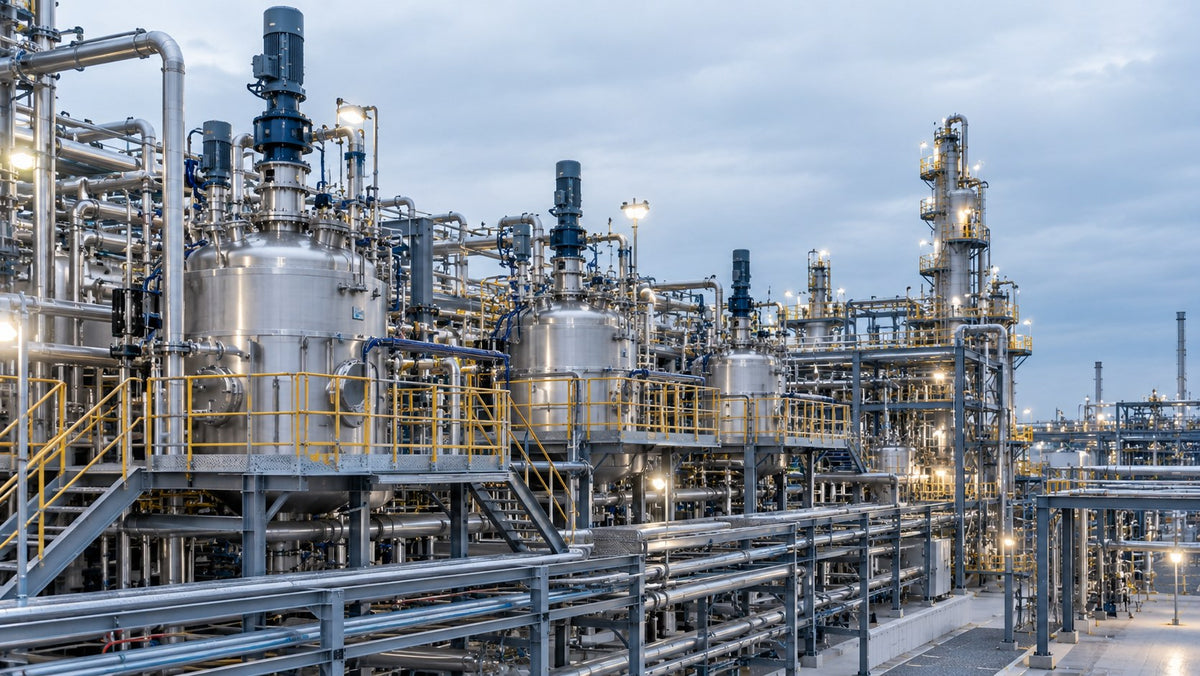
Multipurpose reactor bay for fine chemicals and API manufacturing with stainless reactors on a steel platform

Fine Chemicals & API Manufacturing

PFA-Lined Valves for Fine Chemicals and API Manufacturing

Corrosion-Resistant Flow Control for Multipurpose Plants, Custom Synthesis, and Pharmaceutical Intermediates

Fine chemicals and pharmaceutical intermediates production demands equipment that can handle diverse, aggressive reagents while maintaining the purity standards required for pharmaceutical, agrochemical, and specialty applications. Multipurpose plants switch between campaigns involving different solvents, acids, bases, and specialty chemicals—each presenting unique corrosion challenges.

GFT9 manufactures PFA-lined valves that provide broad chemical resistance to the reagents of fine chemical synthesis. Our products serve CDMO facilities, API manufacturers, custom synthesis operations, and specialty chemical producers where material compatibility, batch purity, and equipment reliability are essential requirements.

From regulatory starting materials to advanced intermediates, our German-engineered PFA-lined components support the demanding requirements of pharmaceutical supply chain manufacturing.

View Clean Room Product Range

Why PFA

Why Fine Chemical Manufacturing Requires PFA-Lined Components

Fine chemicals are produced in multipurpose plants through multistep batch synthesis, often involving aggressive reagents, elevated temperatures, and strict purity requirements. Unlike bulk chemical plants with dedicated equipment, fine chemical facilities must accommodate rapid changeover between products with vastly different chemical profiles.

The Multipurpose Challenge:

A typical fine chemical or CDMO facility may handle:

• Strong mineral acids: HCl, H₂SO₄, HNO₃, HBr for acidification, activation, and hydrolysis reactions
• Caustic solutions: NaOH, KOH for neutralization, saponification, and base-catalyzed reactions
• Organic solvents: THF, DCM, DMF, DMSO, acetonitrile, methanol, toluene as reaction media
• Specialty reagents: Grignard reagents, organolithiums, coupling catalysts
• Oxidizers and reducers: H₂O₂, NaBH₄, LiAlH₄ for redox transformations

This chemical diversity means equipment needs a wetted material with very broad chemical resistance, which PFA provides.

Why PFA for Fine Chemicals:

PFA delivers broad chemical resistance essential for multipurpose operations:

• Resists mineral and organic acids; check concentration and temperature with us
• Resists caustic solutions and amines
• Resistant to chlorinated solvents, polar aprotic solvents, and aromatic hydrocarbons
• Resists the oxidizing and reducing agents listed above
• Easy cleaning: Smooth, non-porous surface enables thorough cleaning between batches
• Valve temperature limits: +200 °C Spheron9, Papilon9, Prohibron9 · +180 °C Imperium9 · +150 °C Vibron9, Purion9, Videron9, Provaron9 · Membron9 per P-T diagram — see each product
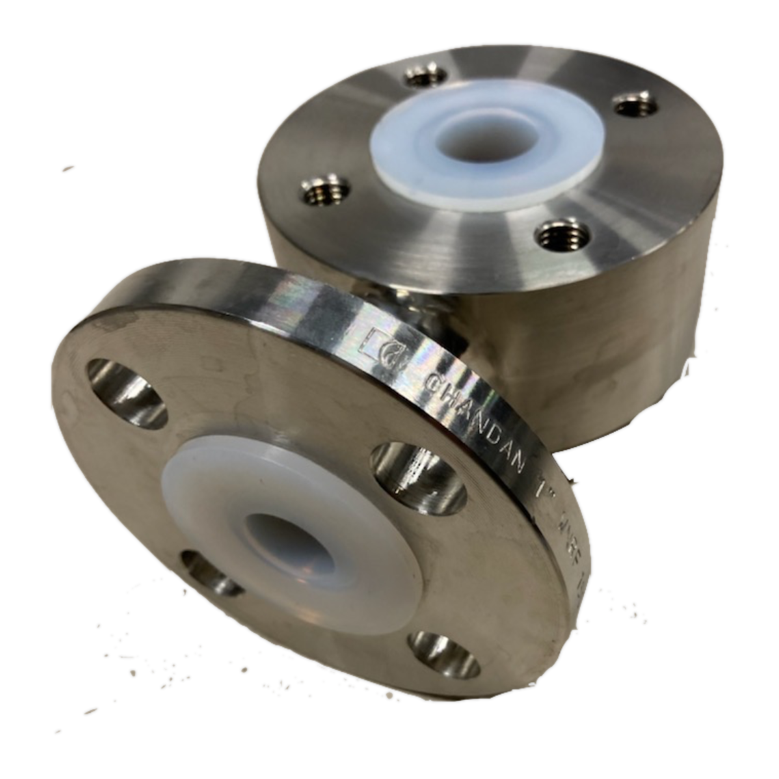
• PFA-lined wetted path — the metal body does not touch the medium

Batch Changeover Advantage:

PFA's smooth, non-porous surface supports cleaning between product campaigns. Cleaning and validation remain the operator's.

Applications

Applications in Fine Chemical and API Manufacturing

Fine chemical and pharmaceutical intermediate production encompasses diverse synthesis operations, each requiring equipment that can handle aggressive chemistry while maintaining product purity.

API Intermediate Synthesis

Active Pharmaceutical Ingredient manufacturing involves multistep organic synthesis with diverse reagents. From regulatory starting materials (RSMs) through registered intermediates to final API, each step may use different solvents, acids, and specialty chemicals. PFA-lined valves provide consistent corrosion resistance across the entire synthesis sequence.

→ Spheron9 ball valve, DN 15 – 200 · up to 16 bar · up to +200 °C · Imperium9 control valve, DN 15 – 100 · up to 16 bar · up to +180 °C · Provaron9 sample valve, DN 25 – 80 · up to 16 bar · up to +150 °C · Videron9 sight glass, DN 15 – 250 · 16 bar · up to +150 °C

CDMO and Custom Manufacturing

Contract Development and Manufacturing Organizations (CDMOs) and custom synthesis providers operate multipurpose facilities that manufacture different products in rapid succession. PFA-lined components support this business model with one lining material that resists a broad range of chemistries; check new media and temperatures with us.

→ Spheron9 ball valve, DN 15 – 200 · up to 16 bar · up to +200 °C · Purion9 T-strainer, DN 25 – 150 · PN 16 · −10 °C up to +150 °C

Pilot Plant and Scale-Up

Process development progresses from laboratory through pilot scale (100-2500L) to commercial production. PFA-lined valves used in pilot operations can be directly scaled to production equipment, simplifying technology transfer.

→ Spheron9 ball valve, DN 15 – 200 · up to 16 bar · up to +200 °C · Prohibron9 ball check valve, DN 15 – 200 · up to 10 bar · up to +200 °C · Videron9 sight glass, DN 15 – 250 · 16 bar · up to +150 °C

Chiral Chemistry and Specialty Synthesis

Asymmetric synthesis, enzymatic reactions, and specialty transformations often involve sensitive intermediates and specialty solvents. PFA's inert nature ensures no catalytic interference or product contamination from valve components.

→ Imperium9 control valve, DN 15 – 100 · up to 16 bar · up to +180 °C · Prohibron9 ball check valve, DN 15 – 200 · up to 10 bar · up to +200 °C

High-Potency and Contained Operations

HPAPI (Highly Potent API) manufacturing requires contained systems with materials that can be thoroughly decontaminated. PFA's smooth surface supports cleaning.

→ Provaron9 sample valve, DN 25 – 80 · up to 16 bar · up to +150 °C

Agrochemical Intermediate Production

Pesticide, herbicide, and fungicide synthesis involves many of the same aggressive chemistries as pharmaceutical manufacturing. PFA-lined valves handle chlorinated intermediates, phosphorus compounds, and specialty reagents common in agrochemical production.

→ Spheron9 ball valve, DN 15 – 200 · up to 16 bar · up to +200 °C · Membron9 diaphragm valve, DN 15 – 150 · pressure per size, see P-T

Chemical resistance

Typical media and PFA resistance

MediumFormulaConcentrationMax. temp.Rating
Tetrahydrofuran (THF)C₄H₈ONeat60 °C Excellent
Dichloromethane (DCM)CH₂Cl₂Neat40 °C Excellent
Dimethylformamide (DMF)C₃H₇NONeat100 °C Excellent
AcetonitrileCH₃CNNeat80 °C Excellent
TolueneC₇H₈Neat100 °C Excellent
MethanolCH₃OHNeat60 °C Excellent

PFA lining resists the solvents listed. For acids, bases, oxidisers and specialty reagents see the PFA chemical resistance guide. Temperature limits shown are conservative for continuous service; the valve's own limit is its P-T rating. Contact us for your media and conditions.

Excellent full resistance, continuous service · Good suitable for most applications · Limited check the conditions with us. Ratings refer to the PFA lining; the valve's own pressure–temperature rating also applies.

Products
PFA-Lined Products for Fine Chemical Manufacturing

PFA-Lined Ball Valves — Spheron9

PFA-Lined Ball Valves — Spheron9

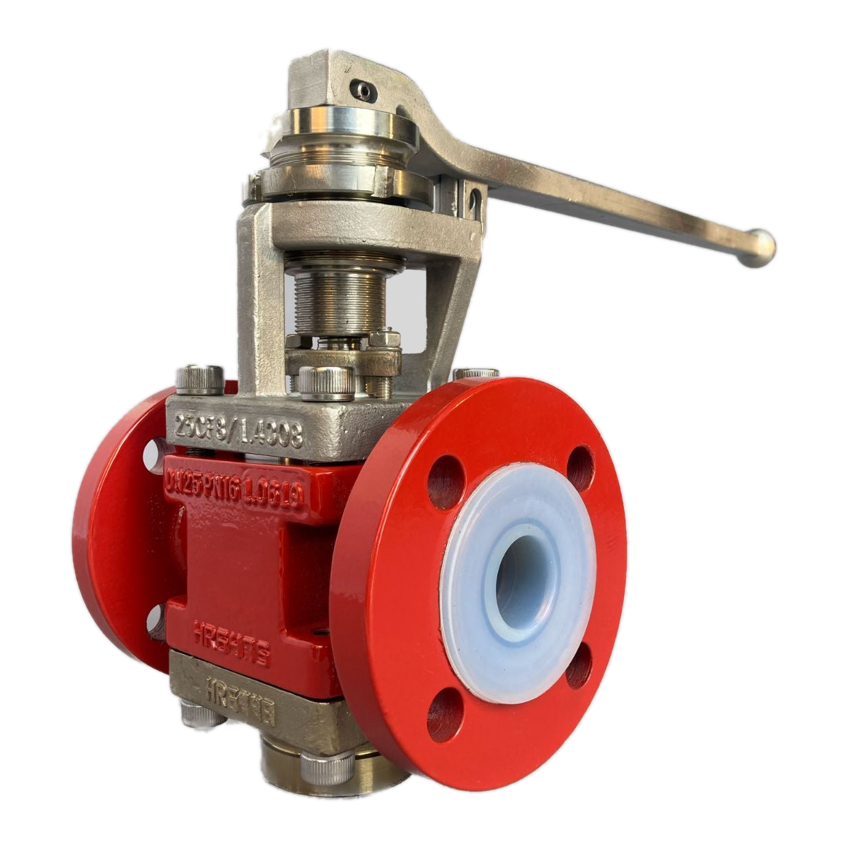
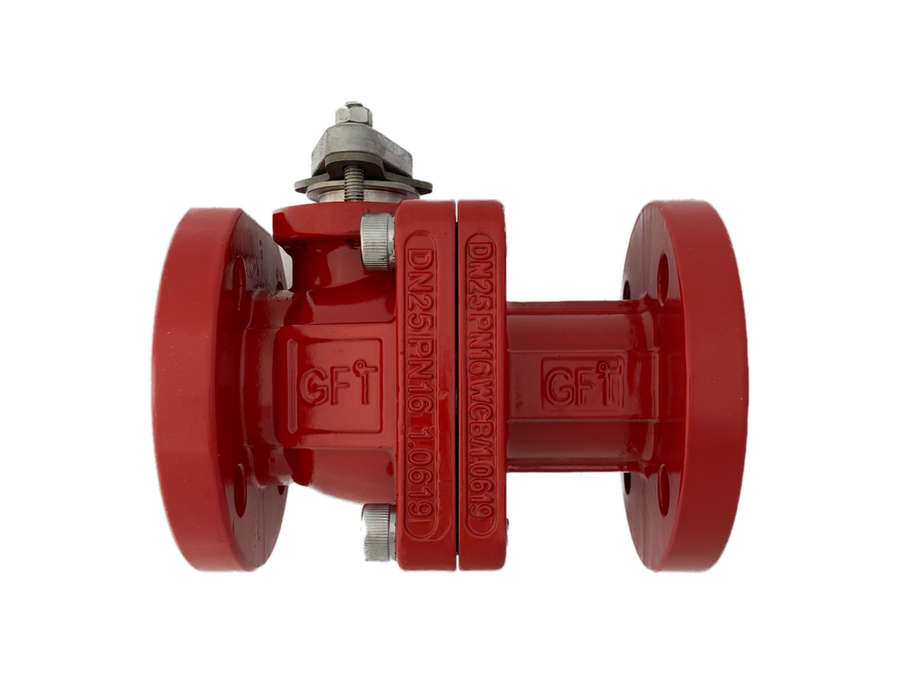
Full-bore isolation with a one-piece PFA-lined ball-stem and two-stage blow-out protection; manual or actuated.

DN 15 – DN 200 / NPS ½" – 8" · up to 16 bar · −10 °C (1.0619) or −60 °C (1.4408 / 1.4409) up to +200 °C, see P-T diagram · TA-Luft leakage class BH (DN 10 – DN 150, certified −20 °C to +180 °C) · actuator mounting to EN ISO 5211 · clean room version with electropolished 1.4408 (CF8M) body.

View Ball Valve Range →
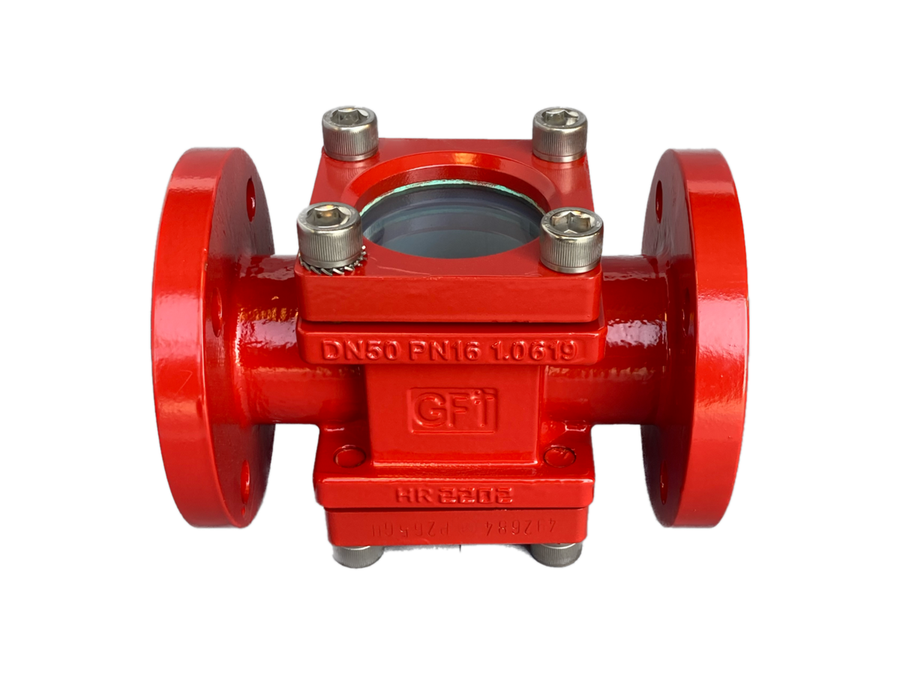
PFA-Lined Sight Glasses — Videron9

PFA-Lined Sight Glasses — Videron9

Visual control of flow, colour and level in lined lines; a fluoropolymer liner between glass and medium on request.

DN 15 – DN 250 / NPS ½" – 10" · 16 bar · −10 °C up to +150 °C · clean room version with electropolished 1.4408 (CF8M) body.

View Sight Glass Range →
PFA-Lined Sample Valves — Provaron9

PFA-Lined Sample Valves — Provaron9

Sampling from lined lines without opening the system.

DN 25 – DN 80 / NPS 1" – 4" · up to 16 bar · −10 °C up to +150 °C · clean room version with electropolished 1.4408 (CF8M) body.

View Sample Valve Range →
Standard Series for Utility and Auxiliary Systems

Standard Series for Utility and Auxiliary Systems

Many fine chemical facilities also require corrosion-resistant valves for utility systems, waste handling, and auxiliary processes that don't require clean room grade equipment. Our standard PFA-lined series with cast steel bodies provides corrosion resistance for these applications.

• Solvent recovery and reclamation systems
• Waste acid and caustic handling
• Scrubber and abatement systems
• Chemical storage and distribution
• Cooling water treatment (where corrosive)

Purion9 T-strainer DN 25 – DN 150 / NPS 1" – 6" · PN 16 · −10 °C up to +150 °C.

Vibron9 swing check valve DN 40 – DN 400 / NPS 1½" – 16" · up to 16 bar · −40 °C up to +150 °C.

Papilon9 butterfly valve DN 40 – DN 600 / NPS 1½" – 24" · 10 bar to DN 450, 6 bar DN 500 – 600 · −10 °C up to +200 °C.

Complete Product Range →

Quality

Quality Documentation for Pharmaceutical Supply Chain

  • Every valve is tested before delivery to DIN EN 12266-1.
  • EN 10204 3.1 material certificates with heat numbers.
  • On request: FDA declaration for the PFA wetted parts.
  • Pressure-bearing products designed and manufactured to PED 2014/68/EU; the Spheron9 ball valve additionally certified under Module A2 with notified body 0035 and type-tested to TA-Luft (leakage class BH, DN 10 – DN 150, certified −20 °C to +180 °C).
  • Made in Germany · country of origin Germany.

FAQ

Questions we are often asked

Why do multi-purpose plants choose PFA-lined valves?

Campaigns change acids, bases and solvents from batch to batch. A PFA lining resists a broad range of them, so one lining material covers changing campaigns; check your media and temperatures with us.

PFA or PTFE lining — what is the difference?

Both are fully fluorinated plastics with almost universal chemical resistance. PTFE cannot be melted, so PTFE liners are pressed and sintered. PFA can be melted, so we transfer-mould it into the valve body: the lining is dense, anchored in the body and follows complex shapes. If your specification says "PTFE-lined", a PFA-lined valve meets the same chemical duty — ask us for a comparison for your medium.

Which documents come with the valves?

Every valve is tested to DIN EN 12266-1 and ships with EN 10204 3.1 material certificates. Pressure-bearing products are designed and manufactured to PED 2014/68/EU; the Spheron9 ball valve is additionally certified under Module A2 and type-tested to TA-Luft. On request we add an FDA declaration for the PFA wetted parts.

Which PFA-lined valve goes where in a fine chemical plant?

Reactor and transfer lines: Spheron9 ball valve, DN 15 – 200. Dosing and control: Imperium9 control valve, DN 15 – 100, or Prohibron9 ball check valve, DN 15 – 200. Sampling: Provaron9, DN 25 – 80. Visual control: Videron9, DN 15 – 250. Ahead of pumps: Purion9 T-strainer, DN 25 – 150.

Discuss Your Fine Chemical Project Requirements

Whether you're equipping a new multipurpose plant, upgrading pilot facilities, or sourcing replacements for existing fine chemical operations, our technical team can support your project.

We work with:
• CDMO facilities and contract manufacturers
• API producers and pharmaceutical intermediate manufacturers
• Custom synthesis and specialty chemical operations
• Pilot plants and process development organizations
• Agrochemical producers

Contact Options:

Email: sales@gft9.shop
Phone: +49 2152 9148591

We can provide application-specific recommendations, chemical compatibility verification, and documentation packages aligned with your quality requirements.

Related: Pharmaceutical & Biopharma · Chemical Processing · Clean Rooms

Request Quotation →

Contact form