Sulfuric Acid Storage & Terminals

PFA-Lined Valves for Sulfuric Acid Storage, Transfer and Terminals

Corrosion resistance that does not depend on concentration — at the points where dilution attacks carbon steel

Concentrated sulfuric acid is one of the few strong acids stored in carbon steel. That works because of a thin film of iron sulfate on the steel surface — and only for as long as that film survives.

At terminals, in storage tank farms and on loading lines, the film is under attack every day: moisture enters through tank breathing and open hatches, lines are washed and flushed with water, and every valve concentrates velocity and turbulence at its seat. Where the acid is diluted or the flow is disturbed, carbon steel loses its protection and corrodes fast.

GFT9 PFA-lined valves have no film to lose. The wetted surface is fluoropolymer throughout, resistant across the concentration range from wash water to concentrated acid, within the valve's pressure-temperature rating.

View the Ball Valve Range →

Why PFA

Why Dilution Is the Real Problem

Concentrated acid protects carbon steel — dilute acid does not. At around 93 % and above, sulfuric acid forms a protective iron sulfate film on carbon steel, which is why technical-grade acid is stored in steel tanks. Diluted acid is far more corrosive to the same steel: the film no longer forms, and the metal is attacked directly.

Dilution happens where nobody plans it. Air breathing in and out of a tank brings humidity; the acid at the liquid surface takes it up and is diluted locally. Lines and hoses are washed out with water after transfers. Condensate collects at low points. Each of these makes a zone of weaker acid exactly where the steel is exposed.

Velocity and turbulence strip the film. High flow velocity, agitation and turbulence remove the iron sulfate layer even in concentrated acid. A valve is where both meet: flow accelerates through the seat, swirls behind the ball or disc, and is throttled during opening and closing.

Vapour space and hydrogen grooving. In tanks and lines, hydrogen generated by corrosion and the moist vapour space above the acid produce grooving and upper-wall attack in carbon steel — damage that develops quietly until it leaks.

PFA removes the dependency. A PFA lining does not rely on a corrosion product to protect it. It resists concentrated acid, dilute acid and wash water alike, so washing, flushing and moisture ingress stop being corrosion events.

Applications

Applications in Sulfuric Acid Handling

Terminals and tank farms

Tank outlet and bottom valves, transfer-line isolation, and the drain, wash and flush points where dilution is routine.

Loading and unloading — ship, rail and road

Loading-arm and hose connections that are washed out after every transfer, with frequent cycling at high flow.

Acid plants and smelters

Product acid from sulfur burning and metallurgical off-gas: transfer, storage and dispatch lines.

Fertilizer production

Sulfuric acid feed to phosphoric acid and fertilizer processes, where dilute and concentrated acid meet.

Dilution stations

Where acid is diluted on purpose, the full range of concentrations — and the heat of dilution — is present in one place. A lining that ignores concentration fits the duty.

Chemical resistance

Typical media and PFA resistance

MediumFormulaConcentrationMax. temp.Rating
Sulfuric Acid, concentratedH₂SO₄93 – 98%120 °C Excellent
Sulfuric Acid, dilution rangeH₂SO₄70 – 93%120 °C Excellent
Sulfuric Acid, diluteH₂SO₄Below 70%120 °C Excellent
Sodium Hydroxide (neutralisation)NaOHAll concentrations to 50%120 °C Excellent
Water (flushing)H₂O—120 °C Excellent

PFA is unaffected by sulfuric acid at every concentration — including the dilution range, where carbon steel and stainless steel corrode fastest. Temperature limits shown are conservative for continuous service. Contact us for your terminal's media and conditions.

Excellent full resistance, continuous service · Good suitable for most applications · Limited check the conditions with us. Ratings refer to the PFA lining; the valve's own pressure–temperature rating also applies.

Products
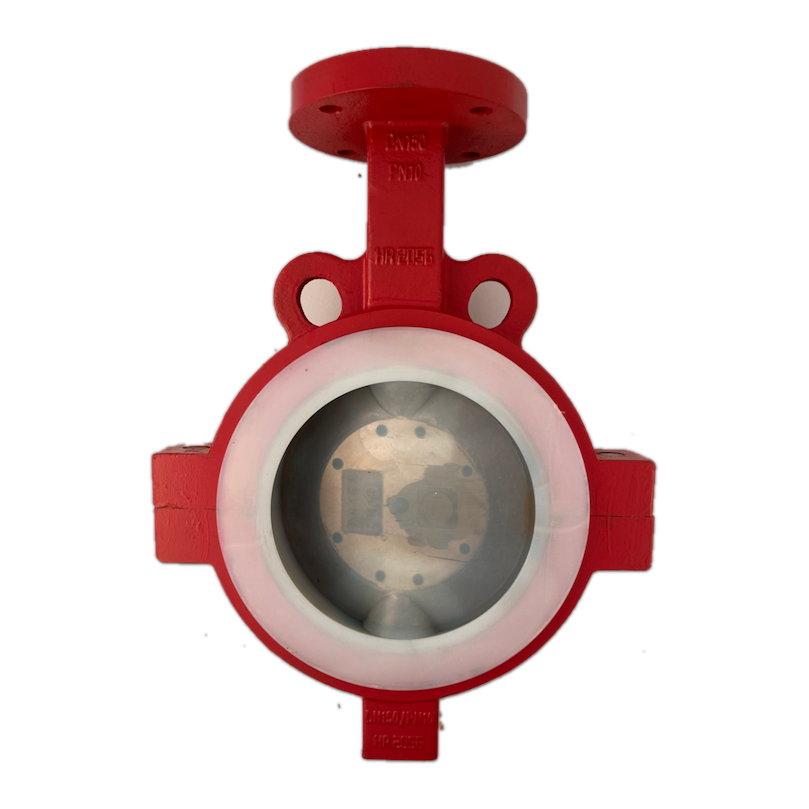
PFA-Lined Products for Sulfuric Acid Service

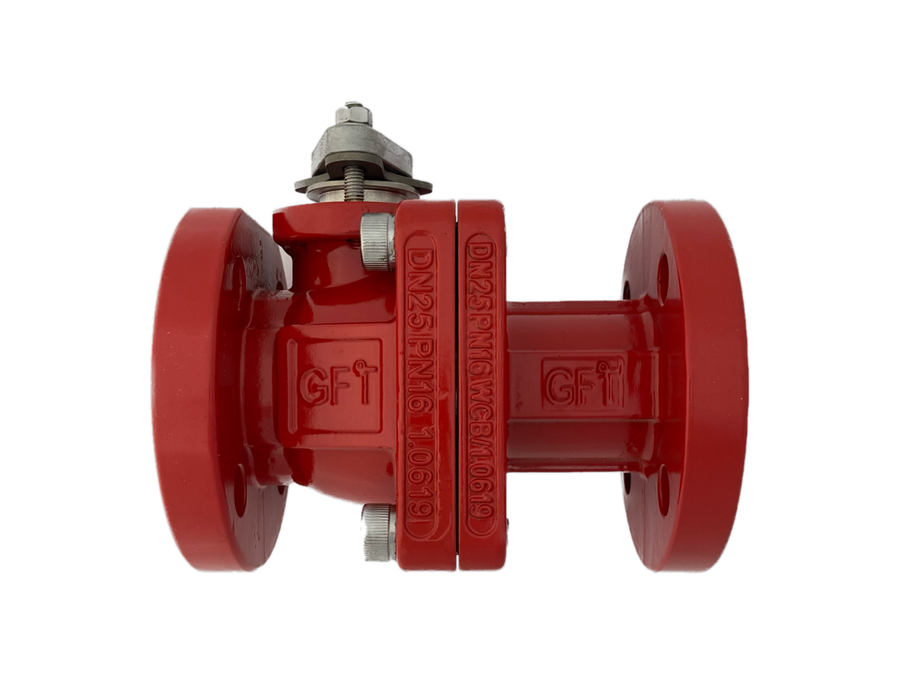
PFA-Lined Ball Valves — Spheron9

PFA-Lined Ball Valves — Spheron9

Full-bore isolation for transfer and loading lines, with a one-piece PFA-lined ball-stem and two-stage blow-out protection.

DN 15 – DN 200 / NPS ½" – 8" · up to 16 bar · up to +200 °C, see P-T diagram · TA-Luft leakage class BH (DN 10 – DN 150) · actuator mounting to EN ISO 5211.

View Ball Valve Range →
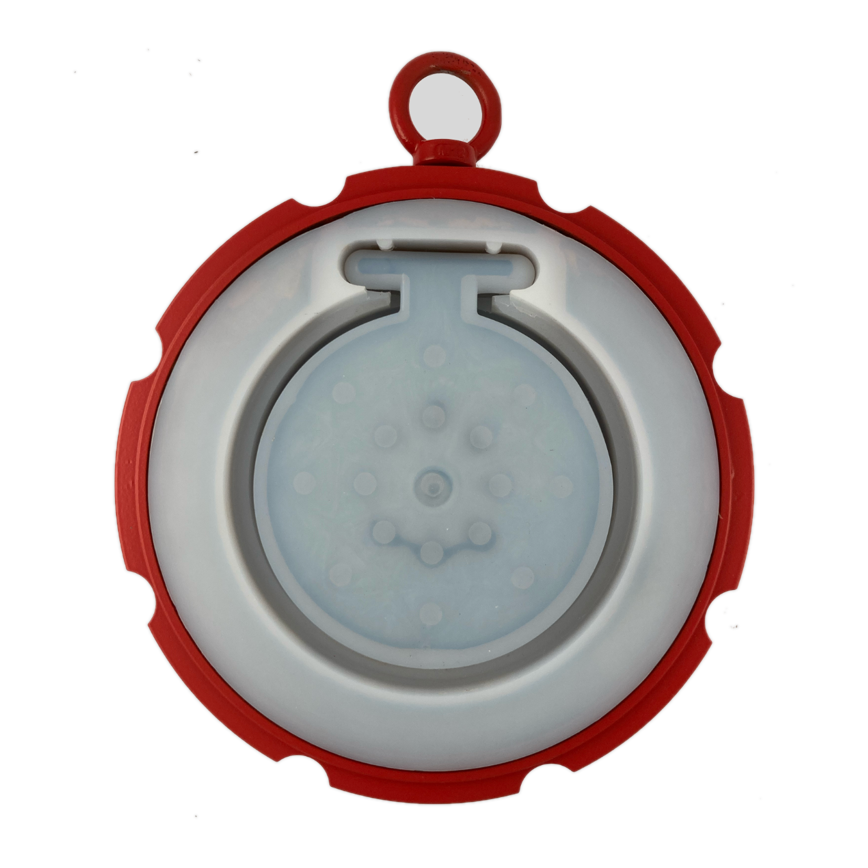
PFA-Lined Check Valves — Vibron9 and Prohibron9

PFA-Lined Check Valves — Vibron9 and Prohibron9

Swing check and ball check valves against backflow on pump discharges and transfer lines.

View Swing Check Valve Range →
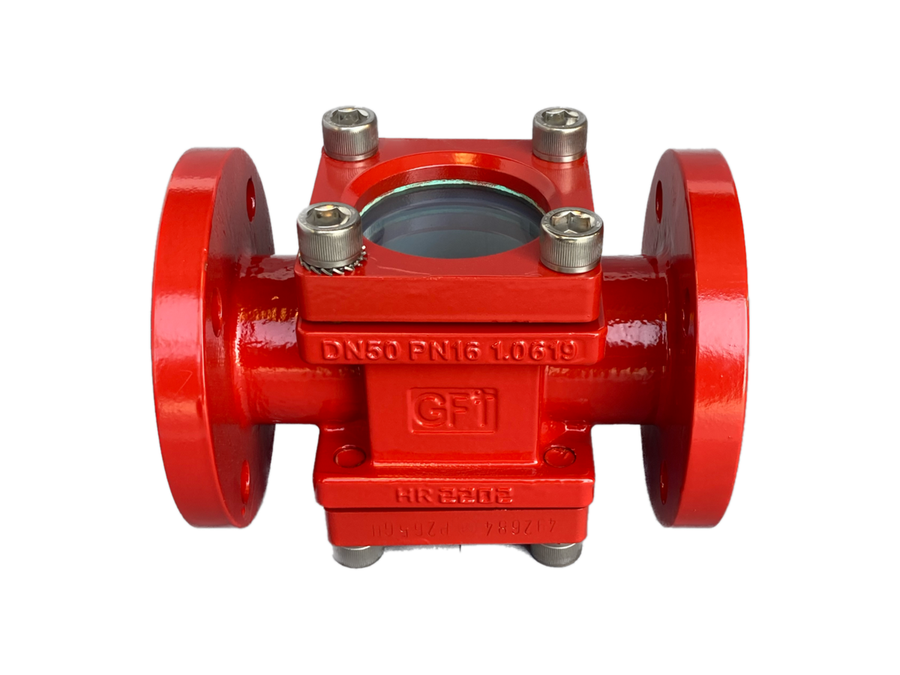
PFA-Lined Sight Glasses — Videron9

PFA-Lined Sight Glasses — Videron9

Visual flow confirmation on loading and transfer lines, with the wetted path in PFA.

View Sight Glass Range →

Quality

Quality and Documentation

  • Every valve is tested before delivery to DIN EN 12266-1.
  • EN 10204 3.1 material certificates with heat numbers.
  • Spheron9 ball valve: TA-Luft leakage class BH to DIN EN ISO 15848-1 (DN 10 – DN 150) and PED 2014/68/EU Module A2 with notified body 0035.
  • Designed in Kempen, Germany · country of origin Germany.

FAQ

Questions we are often asked

Why does carbon steel fail in sulfuric acid terminals?

Concentrated acid protects carbon steel with a thin iron sulfate film. Water from tank breathing, washing and flushing, and high velocity at valves, strip that film — corrosion follows at nozzles, outlets and loading points. A PFA lining does not depend on a film.

PFA or PTFE lining — what is the difference?

Both are fully fluorinated plastics with almost universal chemical resistance. PTFE cannot be melted, so PTFE liners are pressed and sintered. PFA can be melted, so we transfer-mould it into the valve body: the lining is dense, anchored in the body and follows complex shapes. If your specification says "PTFE-lined", a PFA-lined valve meets the same chemical duty — ask us for a comparison for your medium.

Which documents come with the valves?

Every valve is tested to DIN EN 12266-1 and ships with EN 10204 3.1 material certificates. Pressure-bearing products are designed and manufactured to PED 2014/68/EU; the Spheron9 ball valve is additionally certified under Module A2 and type-tested to TA-Luft. On request we add an FDA conformity declaration for the PFA wetted parts and a TSE/BSE statement.

Discuss Your Sulfuric Acid Application

Tell us the concentration range, temperature, pressure and where dilution can occur — tank breathing, washing, flushing, condensate — and we will recommend the valve type and size.

We work with terminal and tank-farm operators, acid producers, fertilizer and metallurgical plants, and the contractors who maintain them.

Email: sales@gft9.shop Phone: +49 2152 9148591

Request Quotation →

संपर्क करें प्रपत्र