PFA-Lined Valves and Components for Data Center Cooling
Corrosion-free flow control for cooling-water treatment, liquid cooling loops and custom lined parts — from prototype to series
Every megawatt of compute ends up as heat, and more and more of it is carried away by water — through cooling towers, chilled-water plants and, increasingly, liquid loops that run directly to the chip. The chemistry that keeps cooling water clean is aggressive, and the loops that reach the chip tolerate no corrosion products at all.
GFT9 makes PFA-lined valves, strainers and custom lined components — designed in Kempen, Germany. Every wetted surface is fluoropolymer: no metal touches the medium, so nothing corrodes into it.
For OEMs, skid builders and contractors we design custom lined parts, build the tooling in-house and produce them from a single prototype up to series.
Cooling-water treatment. Open cooling towers are dosed with sodium hypochlorite as biocide — typically 10–12.5 % product — and with sulfuric acid to hold pH. Carbon steel, copper, brass, aluminium and galvanised parts are not suitable for hypochlorite service, and the two chemicals must run in separate lines. A fully PFA-lined valve or strainer handles both with the same design.
Liquid cooling loops. Direct-to-chip cold plates carry coolant through microchannels that particles block. The Open Compute Project's guidelines for propylene-glycol (PG25) cold-plate loops recommend side-stream filtration below 5 µm, treat sediment or particulates as a sign of material incompatibility or corrosion, and list fluoropolymers — FEP and PTFE — among the acceptable wetted materials. A PFA-lined valve or fitting adds no metal ions and no corrosion products to the loop.
Maintenance on your schedule. A wetted path that does not corrode does not set its own replacement interval. Inspection follows the operation of the site, not the wear of the material.
Applications
Where GFT9 Products Fit in a Data Center
Cooling-tower chemical dosing
Isolation and check valves on hypochlorite and sulfuric-acid dosing lines; strainers protecting dosing pumps and injection points. Hypochlorite and acid stay on separate, fully lined lines.
Make-up water treatment
Acid and caustic lines for softening, demineralisation and RO pretreatment of the make-up water that feeds the cooling system.
Liquid cooling — CDU and secondary loops
Lined valves, strainers and fittings wherever the wetted path must stay metal-free and particle-free, including conductive PFA/AS lining where static charge has to be dissipated.
Custom lined components in series
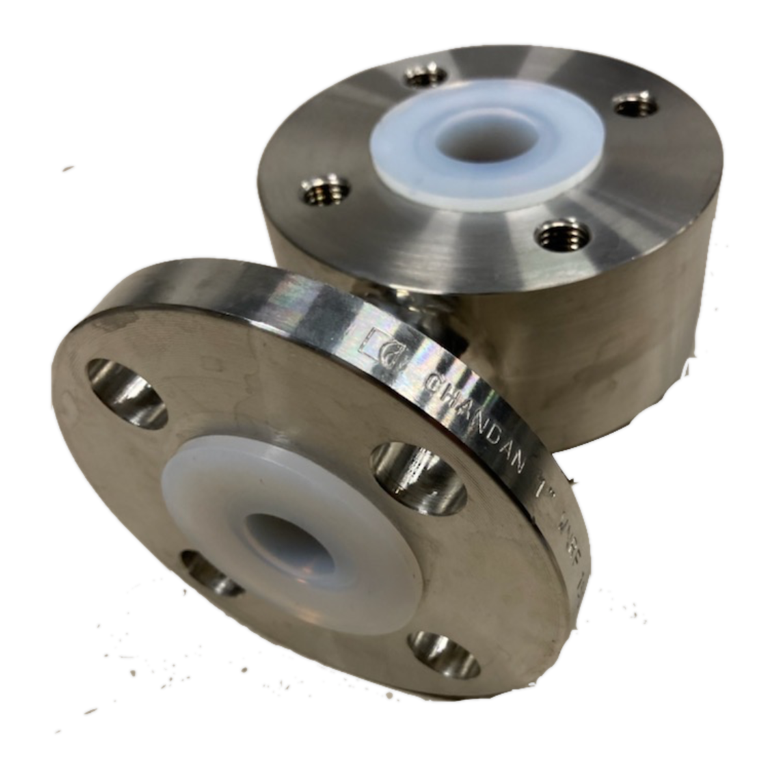
Manifolds, tees, reducers, flow bodies and housings lined in PFA to your drawing. We design the part and the tool, build the mould in-house and transfer-mould the lining — from one prototype to series production. 3D models (STEP) for your integration are available on request.
Chemical resistance
Typical media and PFA resistance
Medium
Formula
Concentration
Max. temp.
Rating
Sodium Hypochlorite
NaOCl
All concentrations to 15%
60 °C
Excellent
Sulfuric Acid
H₂SO₄
All concentrations to 98%
120 °C
Excellent
Sodium Hydroxide
NaOH
All concentrations to 50%
120 °C
Excellent
Hydrochloric Acid
HCl
All concentrations to 37%
120 °C
Excellent
Ethylene / Propylene Glycol
C₂H₆O₂ / C₃H₈O₂
All concentrations
100 °C
Excellent
Deionised Water
H₂O
Pure
120 °C
Excellent
PFA resists the full range of cooling-water treatment and coolant chemistry. Hypochlorite and acid are dosed through separate lines and are never mixed. Temperature limits shown are conservative for continuous service. Contact us for your medium and conditions.
Excellent full resistance, continuous service · Good suitable for most applications · Limited check the conditions with us. Ratings refer to the PFA lining; the valve's own pressure–temperature rating also applies.
Products
PFA-Lined Products for Data Center Cooling
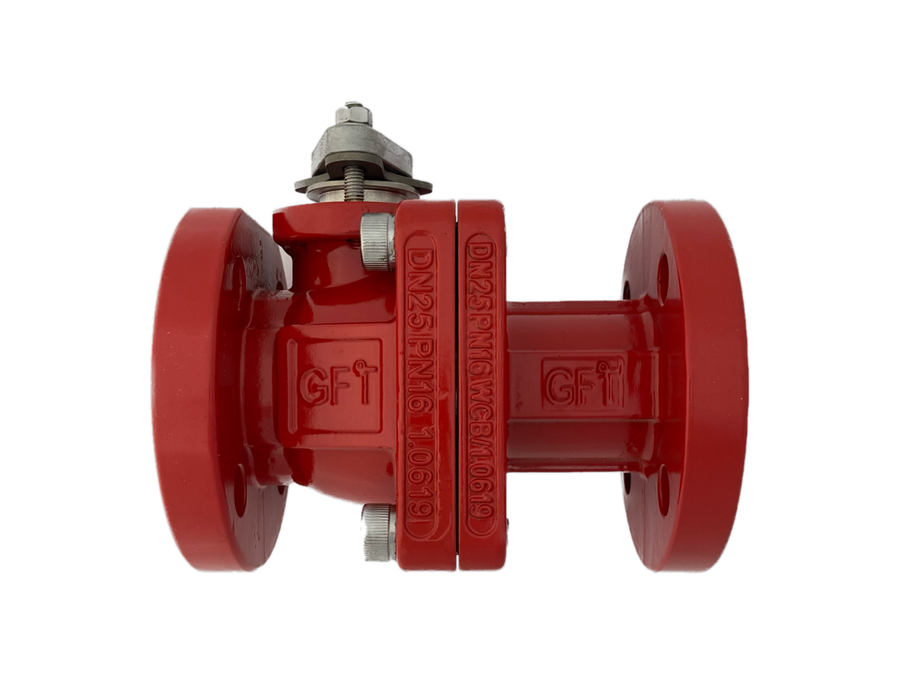
PFA-Lined Ball Valves — Spheron9
Full-bore isolation with a one-piece PFA-lined ball-stem and two-stage blow-out protection.
DN 15 – DN 200 / NPS ½" – 8" · up to 16 bar · −10 °C (1.0619) or −60 °C (1.4408 / 1.4409) up to +200 °C, see P-T diagram · actuator mounting to EN ISO 5211 · uncoated stainless steel body available.
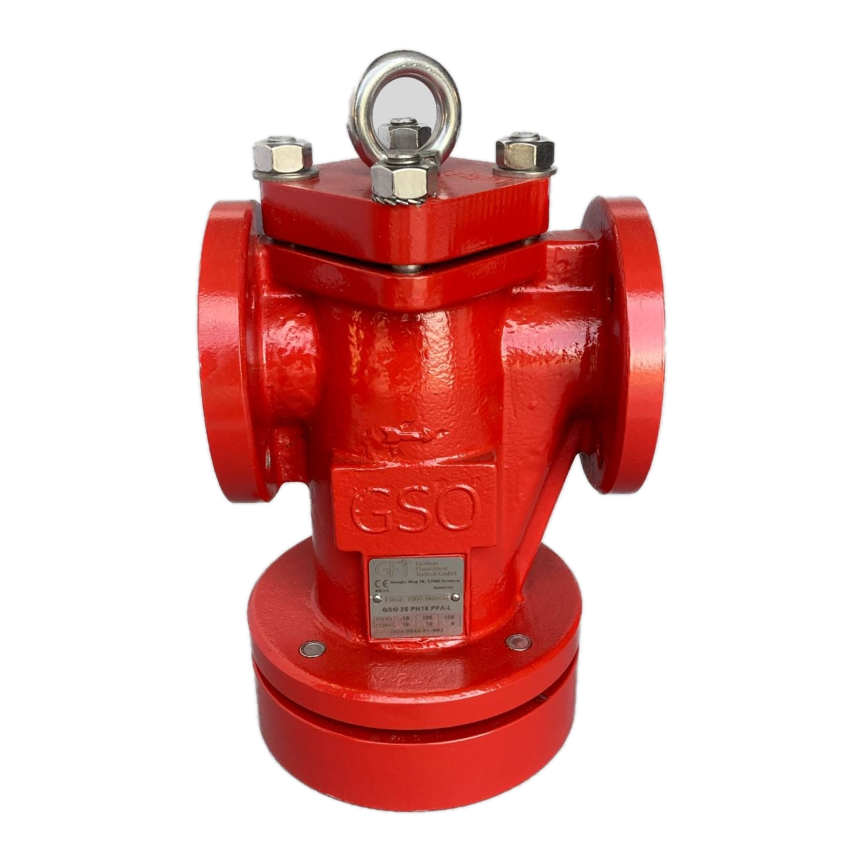
T-pattern strainers with full PFA lining and PTFE baskets protect dosing pumps, injection points and instruments from particles — the same hypochlorite filtration duty we supply to industrial water systems.
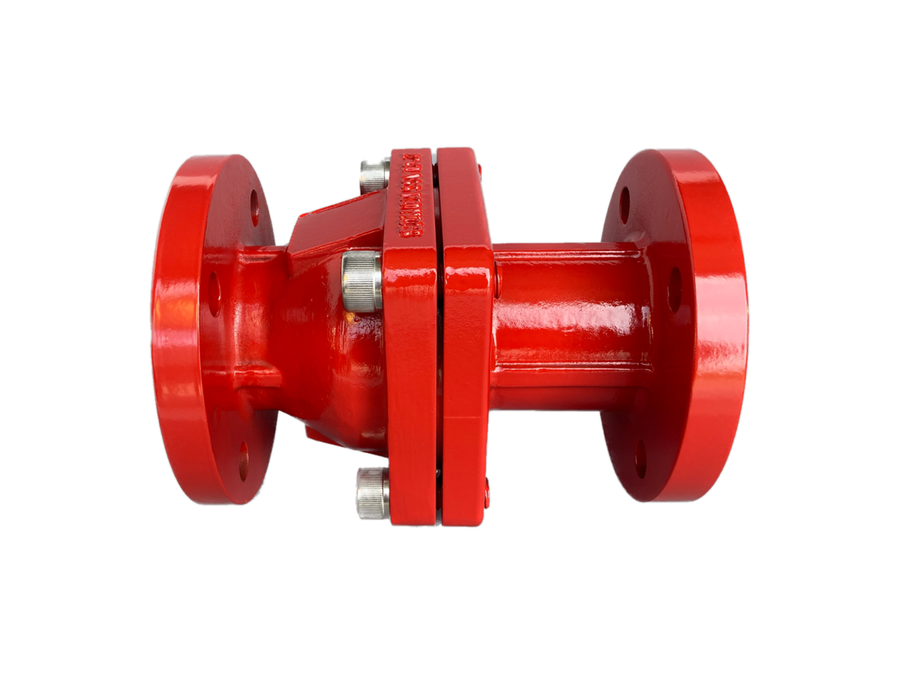
Your part, lined in PFA: in-house design, in-house tool and mould making, and PFA transfer moulding — one prototype or a series. Send a drawing, a sample or a sketch.
Every valve is tested before delivery to DIN EN 12266-1.
EN 10204 3.1 material certificates with heat numbers.
Wetted path entirely fluoropolymer; conductive PFA/AS lining and PTFE/AS seats for antistatic service.
Spheron9 ball valve: TA-Luft leakage class BH to DIN EN ISO 15848-1 (DN 10 – DN 150) and PED 2014/68/EU Module A2 with notified body 0035.
Designed in Kempen, Germany · country of origin Germany.
FAQ
Questions we are often asked
Why lined valves in data center cooling-water treatment?
Cooling towers are dosed with sodium hypochlorite and sulfuric acid. Both attack carbon steel, brass and copper; PFA-lined valves keep the dosing lines tight. The two chemicals run in separate lines — never mixed.
PFA or PTFE lining — what is the difference?
Both are fully fluorinated plastics with almost universal chemical resistance. PTFE cannot be melted, so PTFE liners are pressed and sintered. PFA can be melted, so we transfer-mould it into the valve body: the lining is dense, anchored in the body and follows complex shapes. If your specification says "PTFE-lined", a PFA-lined valve meets the same chemical duty — ask us for a comparison for your medium.
Which documents come with the valves?
Every valve is tested to DIN EN 12266-1 and ships with EN 10204 3.1 material certificates. Pressure-bearing products are designed and manufactured to PED 2014/68/EU; the Spheron9 ball valve is additionally certified under Module A2 and type-tested to TA-Luft. On request we add an FDA conformity declaration for the PFA wetted parts and a TSE/BSE statement.
Discuss Your Data Center Project
We work with water-treatment service companies, skid and CDU manufacturers, MEP and installation contractors, and data center engineering teams. Send us the medium, temperature, pressure and the part — a drawing, a sample or a sketch is enough to start.